If your Laravel app is running LLM-powered agents, tokens are the recurring cost and latency driver you need to manage. This article walks through practical, production-ready approaches for token budgeting and prompt compression so you can keep monthly spend predictable and preserve performance without breaking agent behavior.
Why token budgeting for LLMs matters in production
Every API call to an LLM consumes tokens. That consumption directly translates to dollar cost and request latency, and it also affects throughput and reliability under load. Token budgeting is the practice of measuring, limiting, and optimizing token use across your product so predictable costs, consistent latency, and service-level constraints can be met.
For Laravel teams the stakes are concrete: a single agent workflow that sends large documents or verbose system prompts can multiply cost across thousands of users. Token-aware design lets you scale without surprises.
Foundational principles
Before diving into techniques, adopt a few habits that make optimization tractable in a real app.
- Measure first: count tokens per feature and per user before optimizing. Data drives where to invest effort.
- Budget by feature: set token budgets per API endpoint or agent persona rather than a single global cap.
- Prioritize correctness: compress only where intelligibility is preserved. Not every prompt can be aggressively shortened.
- Automate limits: enforce guards at the API layer so runaway inputs are caught early.
- Monitor continuously: track tokens, cost, and latency to spot regressions when models or prompts change.
Prompt compression techniques that work
Use these techniques selectively; the goal is to reduce token usage while maintaining task fidelity.
1. Replace raw context with concise summaries
When an agent needs a user's long history or document, summarize that content before sending it to the LLM. A two-step approach works well: run a short summarization pass (cheap model, low tokens) and use the compressed summary in subsequent calls.
// conceptual PHP/Laravel flow (pseudocode)
$summary = $this->summarizeHandler->summarize($longText); // saves tokens
$response = $llmClient->complete([ 'prompt' => $systemPrompt . "\nContext: $summary" ]);
Summaries should be canonical (same format each time) to make downstream prompts compact and predictable.
2. Store and reuse distilled state
Conversation state grows quickly. Instead of resending whole threads, keep a running, compressed state object per conversation (for example: key facts, user intent, unresolved tasks). Update that state with incremental summaries after each exchange and send only the distilled state with the prompt.
3. Use retrieval over inclusion
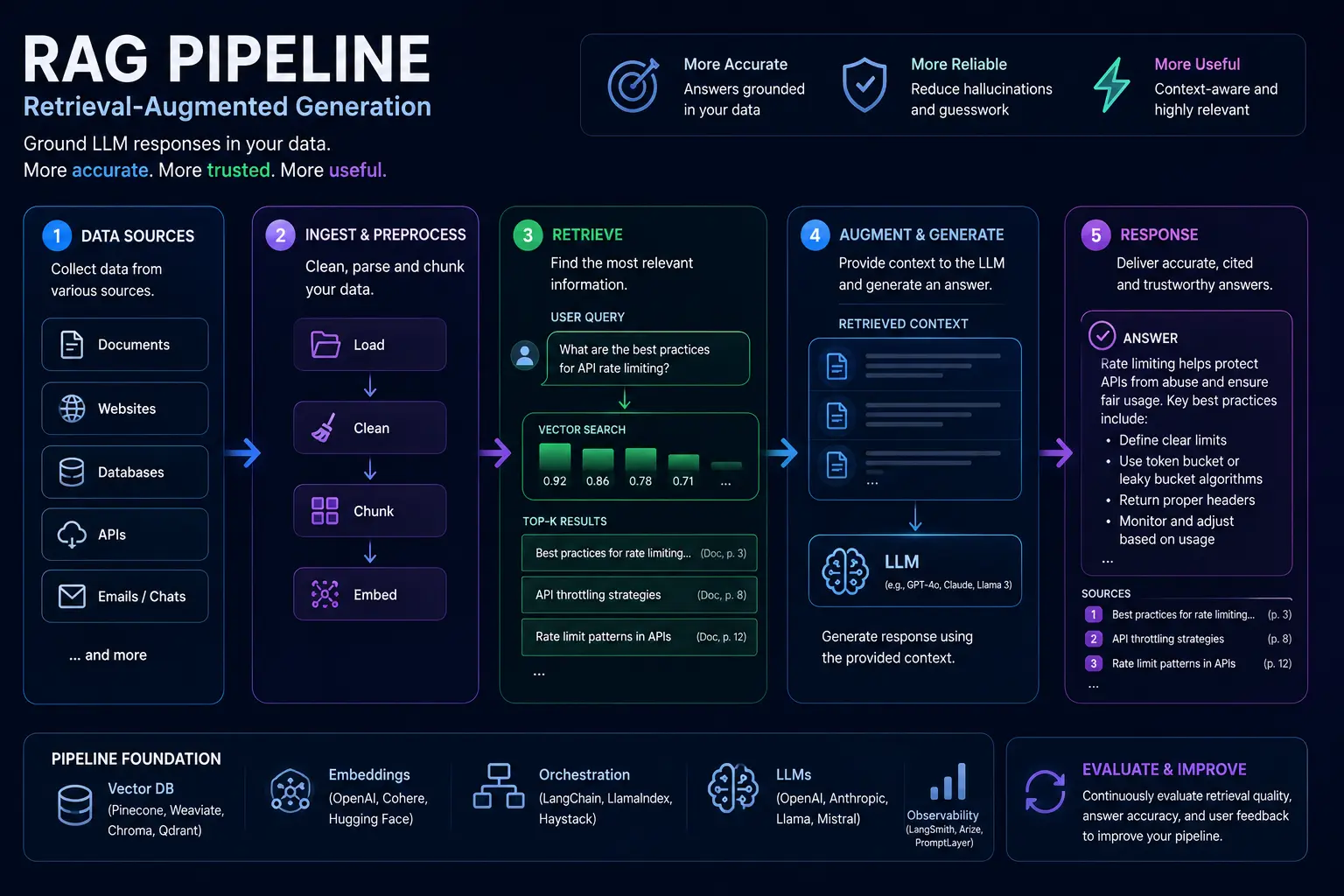
For agents that need reference material (product docs, user data), store those documents in a vector store and retrieve only the few most relevant passages. Passing three short passages is almost always cheaper than sending an entire document.
4. Tighten system and instruction text
System messages and instructions are often verbose. Move long, stable guidance into server-side logic where possible. If the LLM must receive instructions, convert them to a bullet-like template that omits redundant phrasing and avoids long examples.
5. Use lossy token compression when acceptable
There are safe lossy strategies: normalize dates to a compact form, map long entity names to short IDs with a small glossary appended, or encode repeated structures (e.g., turn repeated JSON fields into a compact table). These reduce tokens but require careful parsing on the client-side.
6. Prioritize model-side techniques
If your provider supports short-context models or specialized summarization endpoints, use them for preprocessing. They cost less per call than running a full model on the entire original prompt and can dramatically reduce downstream tokens.
Token-aware engineering patterns for Laravel
Integrate compression into Laravel's architecture so it becomes an operational feature rather than an ad-hoc optimization.
Middleware and request guards
Create middleware that measures estimated tokens for incoming agent requests and rejects or trims inputs above a safe threshold. This prevents accidental spikes before they hit billing.
// example middleware pseudocode
public function handle($request, Closure $next)
{
$est = TokenEstimator::estimate($request->input('prompt'));
if ($est > config('ai.max_input_tokens')) {
return response()->json(['error' => 'Prompt too large'], 413);
}
return $next($request);
}
Background jobs for expensive preprocessing
When a user uploads large content, offload summarization and indexing to queued jobs. That keeps the UI responsive and batches expensive token usage during off-peak times.
Per-feature budgets and quotas
Implement token budgets at the feature level: daily token allowance for long-form generation, stricter limits for free tiers, and higher caps for paid tiers. Enforce budgets in the service layer and expose usage telemetry to product owners.
Caching and memoization
Cache summaries, vector search results, and common prompt completions. Many requests are repeated across users or within a session; caching avoids redundant token spend.
Instrument token usage
Add token counters to the LLM client wrapper. Log tokens used per call and aggregate by endpoint, user, and agent. Those metrics power alerts and capacity planning.
Practical examples and trade-offs
Three short scenarios illustrate realistic trade-offs.
Scenario A — customer support agent
Problem: Long conversation history plus product docs. Solution: keep a per-conversation "fact sheet" (5–8 lines) updated after each turn; run a weekly batch to re-summarize deep history; use vector retrieval for docs. Trade-off: extra engineering for state management but large token and latency savings.
Scenario B — document QA over long PDF
Problem: Users ask questions about multi-thousand-word documents. Solution: chunk PDFs, embed chunks, retrieve top N chunks, then compress retrieved text into a short context. Optionally run a single-pass summarization of retrieved chunks before final QA. Trade-off: slightly higher implementation complexity to maintain the vector index, but predictable per-query token usage.
Scenario C — internal agent with strict accuracy
Problem: Legal or medical content where omissions are dangerous. Solution: prefer inclusion of source text where accuracy is required; compress elsewhere and rely on model-verified citations. Trade-off: higher tokens and cost for accuracy-critical flows.
Monitoring, alerting, and operational controls
Token budgeting isn't a one-time effort. Put operational controls in place:
- Daily and weekly token usage dashboards by feature and environment.
- Automated alerts when a feature exceeds a threshold or when per-user usage spikes.
- Emergency throttles that reduce generation length or switch to lower-cost models when spending approaches budget.
- Regular reviews of prompts: even small wording changes can change token consumption.
These practices pair well with product-level budgeting and forecasting to avoid surprise bills and to plan capacity for growth.
Quick checklist to implement today
- Instrument token counting in your Laravel LLM client wrapper.
- Set per-endpoint token budgets and enforce them with middleware.
- Identify high-cost prompts and apply summarization or retrieval-first patterns.
- Cache summaries and common completions; run expensive preprocessing in background jobs.
- Monitor tokens, cost, and latency; add alerts and emergency throttles.
Practical token optimization is about predictable trade-offs: reduce tokens where you can, preserve fidelity where you must, and automate enforcement so cost stays under control.
When compression hurts — and how to avoid it
Aggressive compression can remove essential context. Avoid over-compression by validating with tests: create a small evaluation suite that compares outcomes before and after compression for representative inputs. If behavior diverges beyond an acceptable threshold, relax compression or use a higher-fidelity summarizer.
Final operational tips
Start small: pick one high-cost endpoint, measure, and apply a single compression pattern. Expand once you see reliable savings. Keep product owners informed with concrete numbers so token budgeting becomes part of feature planning. And remember that investing a little engineering time in canonical summaries, caching, and retrieval often pays for itself quickly in recurring savings.
Frequently Asked Questions
How do I measure tokens in my Laravel app?
Use the provider's tokenizer library when available; otherwise instrument your LLM client wrapper to record tokens reported by the provider and supplement with a heuristic (word or byte-based) estimator for inputs before the call. Log tokens per endpoint and aggregate by user and feature.
When should I summarize instead of sending the full document?
Summarize when the agent needs gist-level context or multi-turn history. If exact phrasing or source text is required for correctness (legal/medical), prefer partial inclusion or cite retrieved passages instead.
Where in a Laravel app should I enforce token budgets?
Enforce budgets at the service layer and introduce a middleware guard for incoming prompts. Use background jobs for heavy preprocessing and cache summaries to avoid repeated token spend.
Does prompt compression risk losing important information?
Yes — aggressive compression can remove critical details. Validate with an evaluation suite that compares outputs before and after compression and relax compression where fidelity drops below acceptable thresholds.
What’s the simplest quick win to reduce token usage?
Cache and reuse summaries or frequent completions. Summarizing long user histories before calls and using retrieval instead of including entire documents are often highest-impact changes with modest engineering effort.